dental-select

Dental Restoration Materials in Pattaya: Zirconia, Porcelain, Titanium, or Acrylic?

Dental restorations in Pattaya

Dental Restoration Materials in Pattaya: Zirconia, Porcelain, Titanium, or Acrylic?

Choosing a crown, veneer, denture, implant component, or bridge is not only a question of price. The material affects strength, appearance, repair options, treatment time, and how your bite feels over the long term.

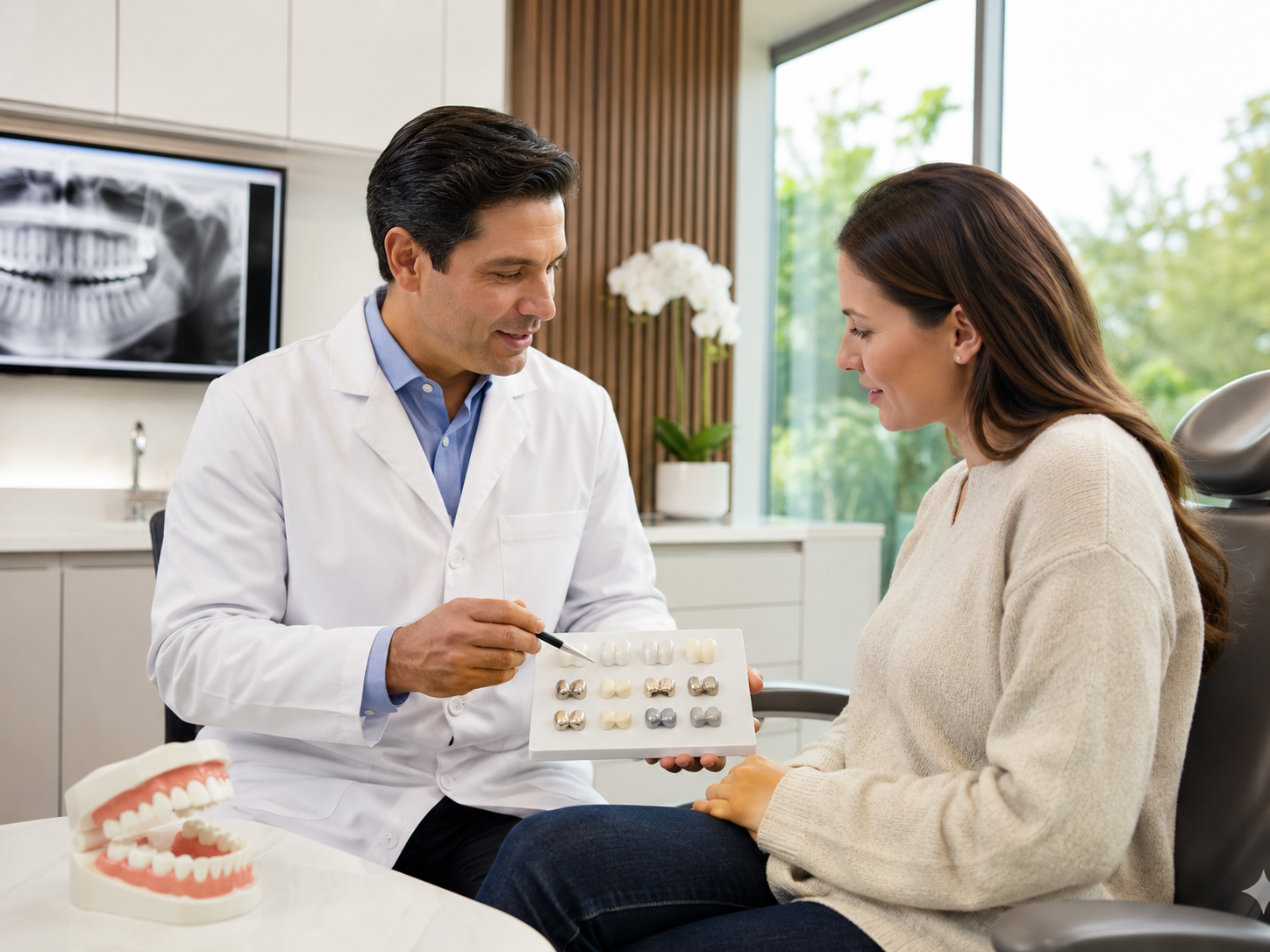
Dentist discussing dental crown and restoration material choices with a patient in Pattaya

Quick answer: which dental material is best?

There is no single best dental restoration material for every patient. Zirconia is often chosen for strength, porcelain and lithium disilicate for highly aesthetic visible teeth, titanium for many implant fixtures, and acrylic or resin for some temporary restorations and dentures. The right choice depends on the tooth position, bite force, smile goals, gum health, available space, and budget.

Why material choice matters

Dental patients in Pattaya often compare treatment costs before choosing a clinic, especially when planning several crowns, dentures, veneers, or dental implants during a trip to Thailand. Cost is important, but the material decision should also answer a more practical question: what needs to survive in your mouth every day?

Back teeth need to handle chewing force. Front teeth need to match color, translucency, and shape. Implant-supported teeth need stable components that fit accurately with the implant system. Dentures need a balance of comfort, repairability, and natural appearance. A good treatment plan weighs these trade-offs before anything is made.

Strength

Molars, bridges, and patients with heavy bite forces may need stronger ceramics or reinforced frameworks.

Aesthetics

Visible front teeth often need materials that can mimic enamel color, edge translucency, and surface texture.

Maintenance

Some materials are easier to polish, adjust, repair, or replace if your bite changes in the future.

Common dental restoration materials explained

MaterialOften used forKey considerations
ZirconiaCrowns, bridges, implant crowns, posterior restorationsVery strong and useful for high-bite areas. Modern translucent zirconia can look natural, but shade matching still needs careful planning for front teeth.
Porcelain or layered ceramicFront crowns, veneers, aesthetic smile workCan create lifelike color and translucency. Layered ceramics may be more technique-sensitive and can chip if overloaded.
Lithium disilicate ceramicVeneers, inlays, onlays, anterior crownsOften chosen where appearance matters and enough enamel or tooth structure remains. Case selection is important.
TitaniumDental implant fixtures and some abutmentsWidely used for implant components because of biocompatibility and long clinical use. Component compatibility with the implant brand matters.
Acrylic or resinDenture bases, temporary crowns, provisional implant teethUseful for temporary or removable solutions and easier to repair than many ceramics. It may wear or stain faster than ceramic materials.
Cobalt-chromium or metal frameworksPartial denture frameworks, some support structuresCan make removable partial dentures thinner and stronger than acrylic-only designs, but the visible clasp position should be discussed.

How material decisions change by treatment

The same material can be excellent in one situation and unsuitable in another. For example, zirconia may be a practical choice for a back molar crown, while a thin ceramic veneer on a front tooth may need a different material to achieve the best optical match.

If you are planning dental implants in Pattaya, the material discussion should include both the implant fixture and the visible tooth attached to it. The implant brand, abutment design, crown material, gum thickness, and bite all affect the final result.

Patient decision checklist

  • Is the restoration for a front tooth, back tooth, or full arch?
  • Do you grind or clench your teeth?
  • Is this a temporary, removable, or long-term fixed restoration?
  • How important is maximum natural translucency?
  • Will future repair or replacement be easy if you travel often?

Cost factors in Thailand and Pattaya

Dental restoration cost in Thailand can vary because the fee is not only for the material itself. The final price may include tooth preparation, digital scans or impressions, laboratory work, temporary restorations, implant components, shade matching, follow-up adjustments, and the complexity of your bite.

A lower-cost option may be appropriate for a temporary denture or provisional crown. For a visible front tooth, complex bridge, or implant-supported restoration, choosing only by the lowest price can create a higher risk of remake, poor shade match, or premature wear. Use the clinic’s dental fee guide as a starting point, then confirm the exact treatment plan after an examination.

What the treatment process usually involves

1

Examination and diagnosis

The dentist checks the tooth, gums, bite, existing restorations, and any X-rays needed for treatment planning. For implants, the planning may also involve bone and gum assessment.

2

Material and design discussion

Your dentist explains suitable options, including the benefits and limits of each material for your case. This is the best time to ask about shade, durability, maintenance, and travel schedule.

3

Preparation, scan, or impression

The tooth or implant area is prepared as needed. A scan or impression is taken so the restoration can be designed and made by the dental laboratory.

4

Fitting and adjustment

The restoration is checked for fit, color, bite, and comfort. Small bite adjustments are common and help protect both the restoration and the opposing teeth.

How to prepare before choosing a material

If you are visiting Pattaya for dental treatment, bring recent dental records or X-rays if you have them. Make a list of previous crowns, implants, allergies, night guard use, and any history of chipped restorations. Tell the dentist if your treatment must fit within a travel window, because some restorations require laboratory time or a follow-up visit.

For cosmetic work, photos of smiles you like can help explain your preferred tooth shape and brightness. For dentures or implants, think about your priorities: fixed teeth, removable teeth, easier cleaning, repair options, or staged treatment. These preferences can change the recommended material and design.

Questions to ask your dentist

  • Why is this material recommended for my bite and tooth position?
  • What are the main alternatives, and what would I gain or give up?
  • How many appointments are usually needed?
  • Can this restoration be repaired if I am overseas?
  • For implant teeth, are the components compatible with my implant brand?
  • Will I need a night guard to protect the restoration?

FAQ about dental restoration materials

Is zirconia better than porcelain?

Zirconia is generally chosen for strength, while porcelain or layered ceramics may be preferred for highly aesthetic front teeth. The better option depends on bite force, tooth position, available space, and the appearance you want.

What material is used for dental implants?

Many implant fixtures are made from titanium or titanium alloy. The visible replacement tooth may be made from zirconia, porcelain, or another dental ceramic, depending on the plan and implant system.

Are acrylic dentures still used?

Yes. Acrylic is still commonly used for full dentures, temporary dentures, and some denture bases because it is adjustable and repairable. Some partial dentures may use metal frameworks for added strength.

Can I choose the cheapest material?

Sometimes a lower-cost material is appropriate, especially for a temporary restoration. For long-term crowns, bridges, veneers, or implant-supported teeth, the decision should also consider durability, appearance, bite force, and future maintenance.

How do I know which material is right for me?

A clinical exam is needed because the best choice depends on your mouth, not just a product name. Dental Select can explain suitable options after checking your teeth, gums, bite, X-rays, and treatment goals.

Planning crowns, veneers, dentures, or dental implants in Pattaya?

Dental Select can help you compare restoration materials, treatment timing, and cost considerations before you decide. Contact the clinic to arrange an examination and receive recommendations based on your teeth, bite, and goals.

Wisdom Tooth Removal in Pattaya: When It’s Needed, Recovery, and Cost Questions

Oral surgery in Pattaya

Wisdom Tooth Removal in Pattaya: When It Is Needed, Recovery, and Cost Questions

Wisdom teeth do not always need to be removed. The decision should be based on symptoms, X-rays, tooth position, cleaning difficulty, and the risk to nearby teeth.

Oral surgery consultation for wisdom tooth removal at Dental Select Pattaya

Quick answer: when should a wisdom tooth be removed?

A wisdom tooth may need removal when it is impacted, partly erupted, repeatedly infected, painful, swollen, trapping food, damaging the second molar, or too difficult to clean safely. If the tooth is healthy, fully erupted, easy to clean, and not affecting nearby teeth, monitoring may be enough. A dental exam and X-ray are the safest way to decide.

Why wisdom teeth can become a problem

Wisdom teeth are the last molars at the back of the mouth. Some grow into a healthy position and can stay. Others come through at an angle, remain trapped under gum or bone, or only partly erupt. That can create a pocket where food and bacteria collect, making the area hard to clean.

For patients living in Pattaya or travelling in Thailand, the practical question is not only whether extraction is possible. It is whether the tooth is likely to keep causing pain, infection, decay, gum inflammation, or damage to the tooth beside it.

Symptoms matter

Recurring pain, swelling, bad taste, gum infection, or difficulty opening the mouth should be checked promptly.

X-rays guide the plan

An X-ray helps show tooth angle, root shape, depth, and how close the wisdom tooth is to nearby structures.

Timing affects recovery

Travellers should avoid scheduling wisdom tooth extraction immediately before a long flight or busy travel day.

Signs you should book an assessment

What you noticeWhy it mattersWhat to ask the dentist
Pain or pressure at the back of the jawThe tooth may be impacted, inflamed, or pressing against the next molar.Does the X-ray show enough space for the tooth to erupt normally?
Swollen gum around a partly erupted toothA gum flap can trap food and bacteria, leading to repeated infection.Is this likely to settle with cleaning, or will it keep returning?
Food trapping, bad taste, or bad breathThe position may make daily cleaning unreliable, increasing decay and gum risk.Can the area be cleaned predictably, or is removal safer long term?
Decay or damage near the second molarA wisdom tooth can create a hidden problem on the tooth in front of it.Is the neighbouring molar still healthy, and does it need treatment too?
Fever, spreading swelling, trouble swallowing, or trouble breathingThese can be warning signs of a more serious infection.Seek urgent dental or medical care rather than waiting for a routine appointment.

Removal is not automatic

A responsible wisdom tooth consultation should explain both sides: why removal may be recommended, and when monitoring is reasonable. The best decision depends on your symptoms, cleaning access, gum health, tooth angle, root shape, medical history, and travel schedule.

Dental Select can review the tooth clinically and with imaging, then explain whether the case looks like a simple extraction, a more surgical removal, or a tooth that can be watched safely.

Monitoring may be reasonable when

  • The wisdom tooth is fully erupted and easy to clean.
  • There is no pain, swelling, decay, or gum infection.
  • The tooth is not damaging the second molar.
  • X-rays show a stable position with low risk.

Simple extraction vs surgical wisdom tooth removal

Wisdom tooth removal cost and recovery vary because not every case is the same. A fully visible upper wisdom tooth may be simpler to remove. A lower wisdom tooth trapped under gum or bone, tilted against the next molar, or close to important anatomy may need a more surgical approach.

Type of caseTypical situationPlanning considerations
Simple extractionThe tooth is visible in the mouth and can usually be loosened and removed without removing bone.Recovery may be more straightforward, but aftercare is still important.
Surgical extractionThe tooth is impacted, partly covered by gum or bone, tilted, or difficult to access.The dentist may need more time, imaging, sectioning of the tooth, sutures, and a longer recovery window.
MonitoringThe tooth is healthy, stable, cleanable, and not causing risk to nearby teeth.Regular checkups help confirm the tooth remains safe to keep.

What happens before wisdom tooth extraction?

1

Clinical examination

The dentist checks the gum, jaw opening, tooth position, bite, neighbouring molars, and signs of infection or swelling.

2

X-ray review

Imaging helps confirm whether the tooth is impacted, how the roots are shaped, and whether removal is expected to be simple or surgical.

3

Medical and travel planning

Tell the dentist about medications, allergies, medical conditions, smoking, previous complications, and any flights or tours planned soon after treatment.

4

Aftercare instructions

You should know what to eat, how to clean the area, what to avoid, and when to contact the clinic if pain, swelling, or bleeding feels unusual.

Recovery after wisdom tooth removal

Recovery depends on the tooth position, extraction difficulty, your health, and how closely you follow aftercare. Mild swelling, tenderness, and limited jaw opening can happen for a few days, especially after surgical removal.

First 24 hours

Rest, protect the blood clot, avoid vigorous rinsing, and follow the clinic's instructions for gauze, food, and medication.

Days 2 to 3

Swelling or soreness may peak. Soft foods, careful cleaning, and avoiding smoking help reduce complications.

Follow-up window

Ask when to return or message the clinic if symptoms worsen, bleeding continues, or pain becomes stronger after improving.

If you are travelling, build in extra time before leaving Pattaya. A review window is especially helpful after a difficult lower wisdom tooth removal.

Wisdom tooth removal cost in Pattaya

People often search for the lowest wisdom tooth removal price first, but a reliable quote depends on the case. The fee may change based on whether the extraction is simple or surgical, how many teeth are involved, whether imaging is needed, and whether medication or follow-up is included.

Use the Dental Select dental fee guide for broader clinic pricing context, then confirm the exact treatment plan after an examination. If you are comparing clinics in Pattaya, ask what the quote includes and whether the dentist expects a simple or surgical removal.

Cost questions to ask

  • Is the quote for one wisdom tooth or multiple teeth?
  • Does it include X-rays, medication, and follow-up?
  • Is this expected to be simple extraction or surgical removal?
  • What should I budget if the tooth position is more complex than expected?
  • How much recovery time should I allow before travel?

Planning treatment as a visitor or expat in Pattaya

Dental Select is located on Pattaya Sai 3 in Nongprue, Banglamung, Chonburi. The clinic regularly helps local residents, expats, and international visitors plan dental care around work, travel, and recovery time.

For wisdom tooth pain during a holiday, do not wait until the final day if you can avoid it. Earlier assessment gives the dentist time to check whether you need extraction, infection control, a follow-up visit, or a safer treatment schedule.

Questions to ask before booking

  • Do my symptoms and X-ray show that removal is necessary?
  • Is monitoring a reasonable option in my case?
  • Is the tooth fully erupted, partly erupted, or impacted?
  • Will the procedure be simple extraction or surgical removal?
  • How should I prepare if I am flying or travelling after treatment?
  • What warning signs mean I should contact the clinic after extraction?

FAQ about wisdom tooth removal in Pattaya

Do all wisdom teeth need to be removed?

No. Some wisdom teeth erupt normally and can be monitored. Removal is more often recommended when the tooth is impacted, painful, infected, hard to clean, or likely to damage nearby teeth.

Is wisdom tooth removal painful?

The procedure is usually performed with local anesthesia, so you should not feel sharp pain during removal. Soreness afterward is common, especially in more difficult cases, and your dentist should explain how to manage recovery.

How long does recovery take after wisdom tooth extraction?

Many patients feel noticeably better within a few days, but recovery varies. Surgical or impacted wisdom tooth removal may need more healing time and a follow-up window, especially before travel.

Can I fly after wisdom tooth removal?

Ask your dentist based on the complexity of your case. It is usually better not to schedule extraction immediately before a long journey, because early swelling, bleeding, pain, or review needs are easier to manage while you are still nearby.

How much does wisdom tooth removal cost in Pattaya?

The cost depends on whether the extraction is simple or surgical, how many teeth are removed, and whether X-rays, medication, or follow-up are included. An exact quote should follow examination and imaging.

Can I wait if my wisdom tooth only hurts sometimes?

Intermittent pain can still signal recurring inflammation, food trapping, decay, or pressure on the nearby molar. A dental exam and X-ray can show whether monitoring is safe or whether removal is more predictable.

Need a wisdom tooth assessment in Pattaya?

Dental Select can examine the tooth, review X-rays, explain whether removal is recommended, and help you understand the expected recovery and cost before you decide.

Dental Implant Cost in Pattaya: What Affects the Price and How to Plan Your Treatment

Dental implant cost in Pattaya

Dental Implant Cost in Pattaya: What Affects the Price & How to Plan

If you are comparing dental implant cost in Pattaya, the most useful question is not simply “What is the cheapest implant?” but “What is included in the full treatment plan?” The total fee changes based on the implant brand, the condition of the bone and gums, the crown material, and whether you need extra treatment before the implant is placed.

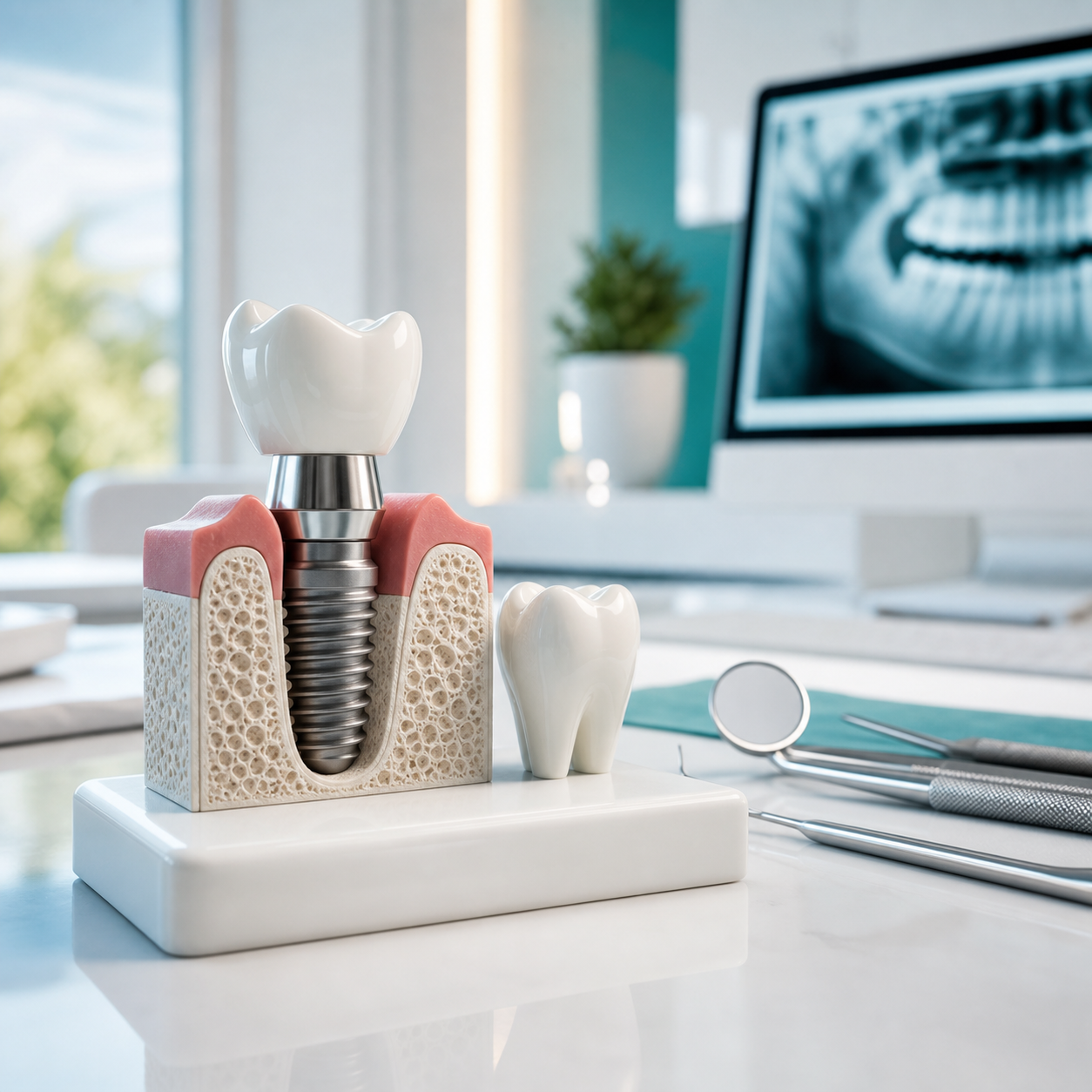
Dental implant model and crown at Dental Select Pattaya

Quick Answer: What affects dental implant cost in Pattaya?

Dental implant cost in Pattaya usually depends on the number of implants needed, the implant system selected, the material used for the final crown, and whether additional procedures such as extraction, bone grafting, or sinus lifting are required. The best comparison is the full treatment plan, not only the starting price of the implant fixture.

For current clinic pricing and service information, it also helps to review the Dental Select dental fee page and the main service page.

Why Different Clinics Quote Different Implant Prices

Many patients are surprised when two clinics give different implant quotes for what sounds like the same treatment. In practice, several factors can change the total fee:

Implant Brand

Different systems have different component pathways, manufacturing standards, and support options.

Case Complexity

A simple single implant is very different from a case that also needs extraction, grafting, or bite management.

Restoration Type

The abutment and crown material (like Zirconia) can change both function and aesthetics.

Comparing Top Dental Implant Brands & Pricing

Different implant manufacturers offer distinct benefits depending on your clinical needs and budget. Here is a breakdown of the leading systems available at Dental Select Pattaya:

BrandOriginImplant Surgery (THB)Zirconia Crown (THB)Total Price (THB)
OsstemSouth Korea30,00020,000 – 25,00050,000 – 55,000
Neodent (by Straumann)Brazil35,00025,00060,000
Swiss Implants (Straumann / Nobel Biocare)Switzerland40,00040,00080,000

How to Compare Value, Not Just a Low Headline Price

These questions help you compare like for like and reduce the risk of choosing a plan that looks cheaper at first but becomes more expensive or less predictable once treatment begins:

  • Ask whether the quote includes only the implant fixture or the full implant-plus-crown treatment.
  • Ask whether imaging, review visits, and follow-up appointments are included.
  • Ask what happens if grafting or extraction is needed after assessment.
  • Ask which implant system is being recommended and why.
  • Ask how many visits you should expect if you are coming from overseas.

What is included in a full implant plan?

  • Consultation and clinical examination
  • Dental X-rays or 3D imaging when needed
  • Tooth extraction (if the tooth is still present)
  • Implant fixture placement
  • Healing and review visits
  • Abutment connection
  • Final crown placement

The Step-by-Step Dental Implant Treatment Process

1

Consultation, Scan & Diagnosis

The dentist checks the tooth, gums, bite, existing restorations, and performs a 3D CBCT scan to assess bone volume and plan precise implant placement.

2

Implant Placement Surgery

The implant fixture (titanium screw) is surgically placed into the jawbone under local anaesthetic. A temporary tooth is fitted if necessary for aesthetics.

3

Osseointegration (Healing Period)

The implant is left to heal and fuse with the bone (osseointegration), which typically takes 3 to 6 months depending on bone density and the implant brand.

4

Abutment & Final Crown Fitting

Once fully healed, the abutment is connected to the implant and the final custom-made Zirconia or porcelain crown is secured and adjusted for a perfect bite.

How Crown & Abutment Materials Change the Final Fee

The implant fixture is only one part of the restoration. The visible tooth above the gum line is the crown, and it connects through an abutment. Material choices can affect both function and appearance:

  • Zirconia crowns: Often selected for strength and aesthetics, especially in visible areas.
  • Porcelain-fused-to-metal crowns: May be suitable in some cases and can influence pricing differently.
  • Customized abutments: May improve fit, angulation, and tissue support in more detailed aesthetic cases.

For front teeth, appearance and gum contour usually matter more, so material planning may differ from what is reasonable in the back of the mouth. Read more on how to choose a dental implant: brand, cost, or dentist.

Frequently Asked Questions

Is the cheapest implant option always the best value?

Not usually. The best value comes from a treatment plan that fits your mouth, includes the right components, and is predictable over time. The lowest starting quote may not include all the steps you eventually need.

Why can one patient’s implant cost be different from another’s?

Bone volume, gum condition, tooth position, implant brand, crown material, and whether extra procedures are needed can all change the final treatment fee.

Can I get an exact price before I come to Pattaya?

You may receive an initial estimate, but a precise quote usually depends on examination and imaging. A complete consultation gives the most reliable treatment plan.

Does implant brand really matter?

Yes, but it should be considered together with the dentist’s assessment, restorative plan, and your long-term needs. Brand is only one part of the decision.

Talk to Dental Select About Your Implant Plan

If you are comparing options for dental implant cost in Pattaya, the most helpful next step is to discuss your current dental condition, goals, and timeline with a qualified clinic. Dental Select can help you understand whether you are a suitable candidate, what steps are likely to be involved, and how to compare treatment choices more confidently.

Dental Scaling in Pattaya: What It Is, Why You Need It & How Much It Costs

Preventive Dental Care in Pattaya

Dental Scaling in Pattaya: What It Is, Why You Need It & How Much It Costs

Dental scaling is a professional deep-cleaning procedure that removes hardened plaque (tartar/calculus) from your teeth and below the gum line — something your regular toothbrush simply cannot do.

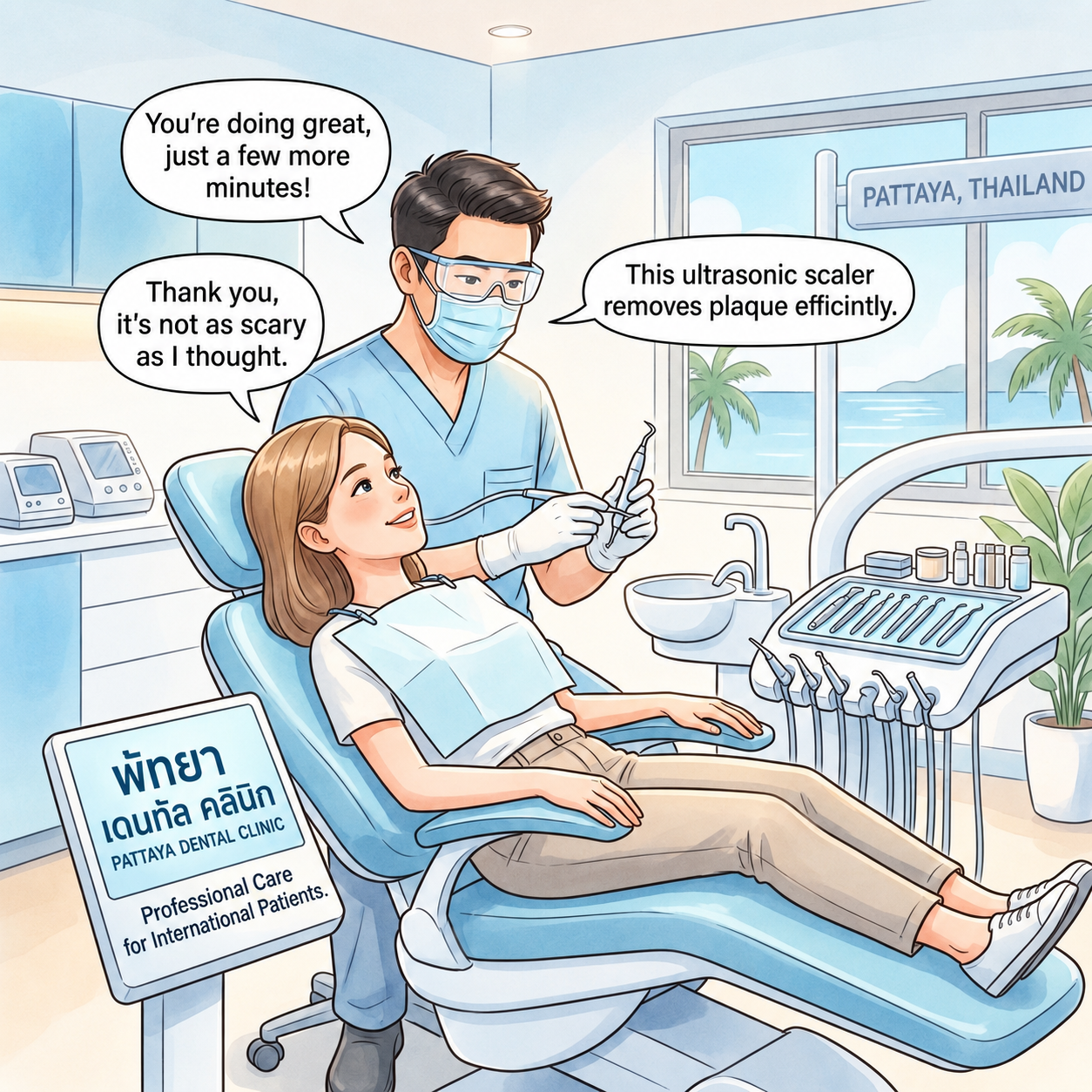
Dentist performing ultrasonic dental scaling on a patient at a modern clinic in Pattaya, Thailand

Quick Answer

Dental scaling cleans and removes calculus (hardened tartar) from the surfaces of your teeth and below the gum line. It halts gum disease (gingivitis), eliminates chronic bad breath, and protects against tooth loss. Dentists recommend having it done every 6 to 12 months.

Key Facts Before You Decide

Best for

Removing calculus (tartar), preventing gum disease, eliminating bad breath, and keeping your teeth and gums healthy.

Planning needed

Assessment of gum health (probing), checking history of bleeding, and scheduling a single 45–90 minute session.

Main goal

Halt gum inflammation, prevent bone recession, and preserve your natural teeth for the long term.

Why Do Dentists Recommend Regular Scaling?

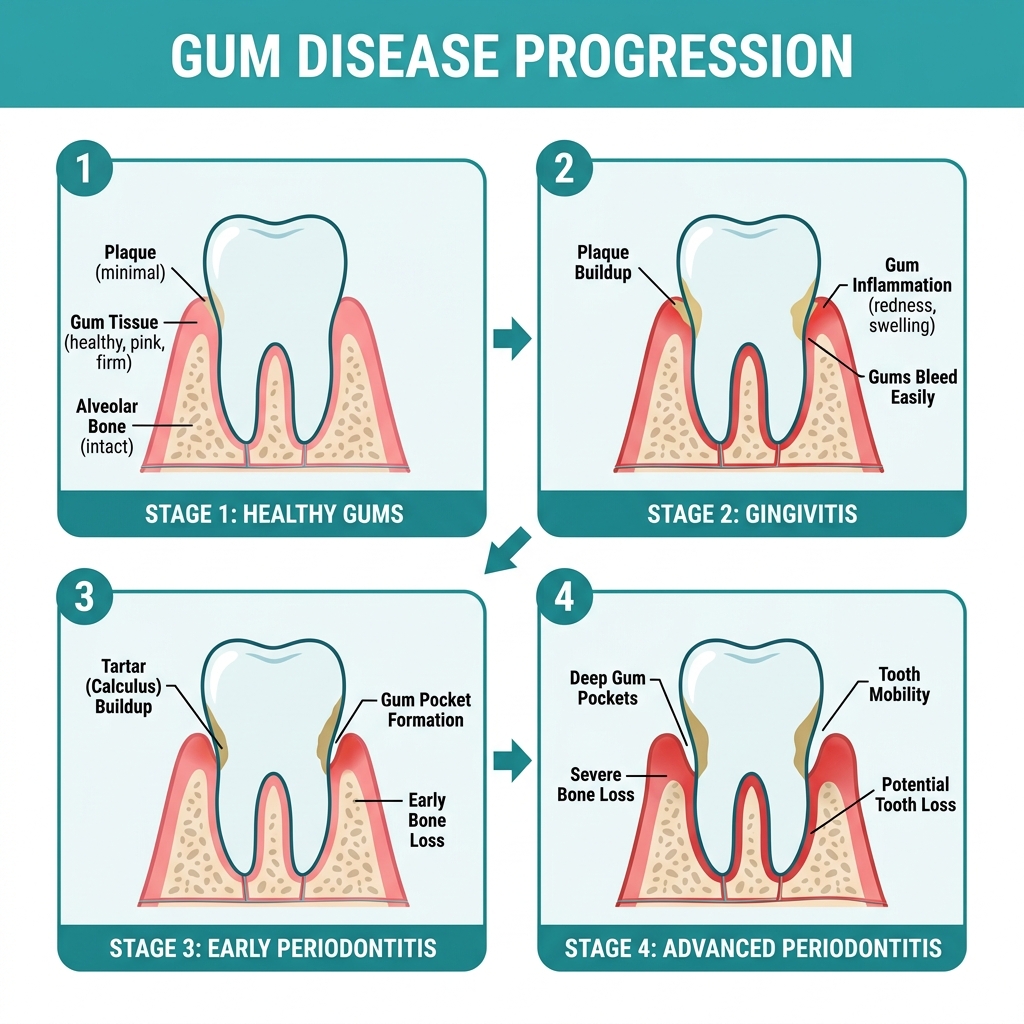
Unchecked plaque hardens into calculus (tartar) within 24 to 72 hours. Once hardened, only a dental professional can remove it safely. Skipping scaling leads to a progressive gum disease cycle:

  • Gingivitis — Swollen, red gums that bleed easily; fully reversible with scaling.
  • Early Periodontitis — Gum pockets form (4-5 mm), and bone starts to recede.
  • Advanced Periodontitis — Significant bone loss, deep pockets, and loose teeth.
  • Systemic Impact — Linked to cardiovascular disease, diabetes, and other health issues.
Diagram showing the 4 stages of gum disease progression from healthy gums to advanced periodontitis

Treatment Snapshot

Treatment typeProfessional scaling, root planing (where needed), and polishing to clean tooth and root surfaces.
Typical stagesInitial assessment, ultrasonic cleaning, precision hand scaling, and tooth polishing.
TimingUsually completed in a single 45-90 minute visit. Severe cases may require two visits.
MaintenanceBrush twice daily, floss daily, and book professional scaling every 6-12 months.

The 5 Core Benefits of Dental Scaling

Halts Gum Disease

Eliminates the bacterial colonies that trigger inflammation, stopping gingivitis before it turns into periodontitis.

Prevents Tooth Loss

Preserves the bone and connective tissues anchoring your teeth. Periodontitis is the leading cause of adult tooth loss.

Eliminates Bad Breath

Removes sulfur-producing bacteria residing in tartar and gum pockets that mouthwash cannot fix.

The Treatment Process

1

Diagnosis & Assessment

The dentist checks pocket depths, looks for bleeding, and takes digital X-rays if bone loss is suspected.

2

Ultrasonic Scaling

A specialized tool uses high-frequency vibrations and a water spray to shatter and wash away tartar deposits.

3

Precision Hand Scaling

The dentist uses precision curettes to scrape off fine tartar particles and smooth root surfaces.

4

Polishing & Flushing

Prophy paste buffs the teeth to slow down plaque re-adhesion, and gum pockets are flushed with antimicrobial rinses.

Price Guidance & International Cost Comparison

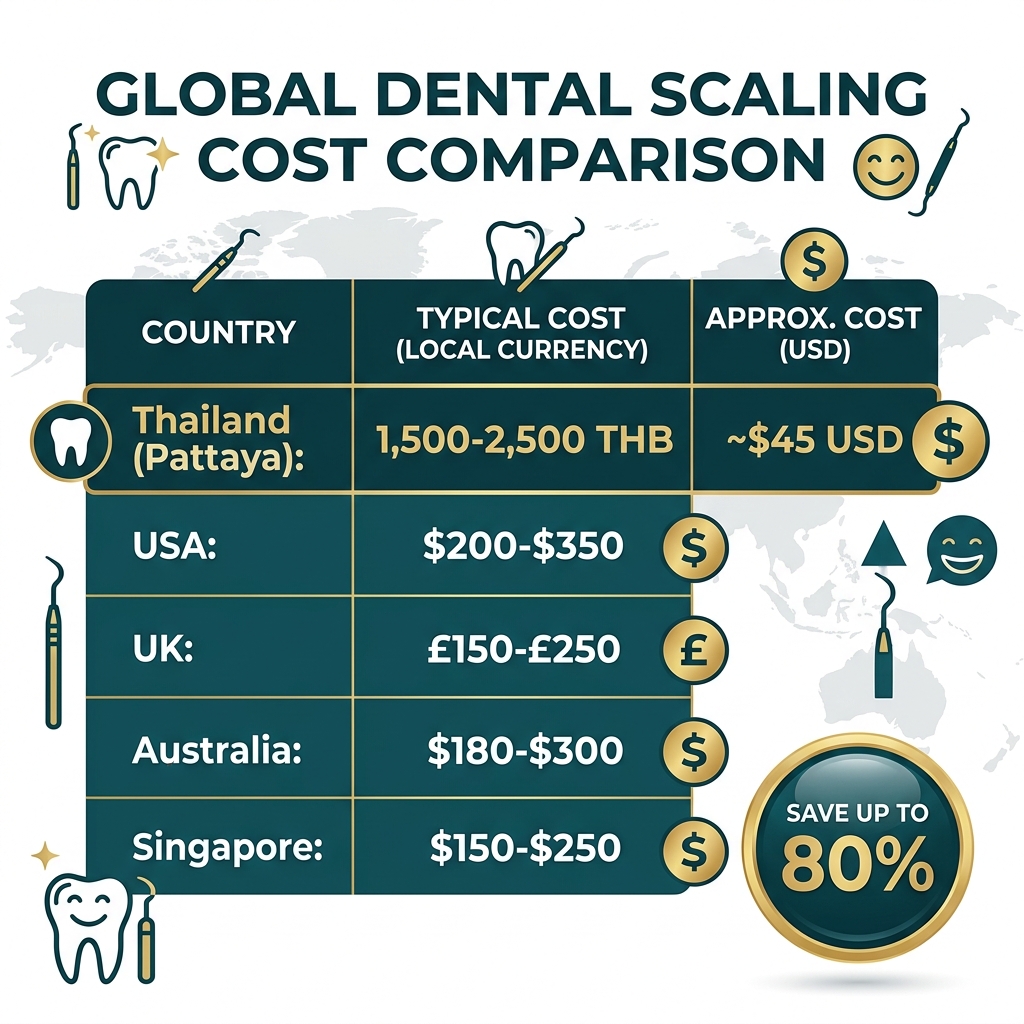
Professional dental scaling in Pattaya is highly cost-effective, saving you 70–85% compared to prices in Western countries. There are no hidden fees, and all pricing is transparent.

CountryTypical Scaling CostApprox. USD
Thailand (Pattaya - Dental Select)1,500 - 2,500 THB~$45 - $75
USA$200 - $350$200 - $350
UK150 - 250 GBP~$190 - $315
AustraliaAUD $180 - $300~$120 - $200
SingaporeSGD $150 - $250~$110 - $185
Dental scaling cost comparison infographic - save up to 80 percent in Thailand

Recovery & Aftercare

Most patients recover completely within 24 to 48 hours. Temporary gum soreness or mild sensitivity to temperature is normal and will resolve on its own.

  • Eat soft foods (yogurt, eggs, soup, rice) for the first 24 hours.
  • Avoid extremely hot, cold, spicy, or crunchy foods for 2-3 days.
  • Rinse with warm salt water to soothe irritated gums.
  • Brush gently with a soft-bristled toothbrush — do not skip brushing.
  • Avoid smoking and alcohol for 48 hours to accelerate healing.

Why Choose Dental Select Pattaya?

Internationally Trained Team

All dentists hold recognized credentials, speak fluent English, and have extensive experience treating international patients.

Modern Technology

Equipped with modern EMS and Piezon ultrasonic scaling systems for maximum comfort and precision cleaning.

Central Pattaya Location

Located on Pattaya Sai 3 Road, our modern clinic is easy to find and fully accessible fromSouth Pattaya, Jomtien, and Naklua.

Ready for a Healthier, Brighter Smile?

Book a consultation and professional dental scaling at Dental Select Pattaya today. Our team is ready to assess your oral health and answer any questions.

Request Appointment
Request dental scaling appointment at Dental Select Pattaya

Frequently Asked Questions

Is dental scaling painful?

For most patients with routine calculus buildup, scaling is only mildly uncomfortable (like vibration and slight pressure). For patients with deeper pockets or significant tartar, local anesthesia can be applied for a comfortable experience.

How often should I get scaling done?

The standard recommendation is every 6 months. Patients with active gum disease, diabetes, or heavy calculus formation may need cleaning every 3 to 4 months until their oral health stabilizes.

Can scaling damage my tooth enamel?

No. Modern ultrasonic scalers are designed specifically to break down hard tartar deposits. They do not damage enamel when used by trained dental professionals.

Will scaling make my teeth sensitive?

Removing tartar exposes tooth roots that were covered, which can cause mild, temporary temperature sensitivity. This resolves in 1-2 weeks. Desensitizing toothpaste (like Sensodyne) can help in the meantime.

Is dental scaling safe during pregnancy?

Yes. Maintaining gum health is very important during pregnancy. The second trimester is the safest window for dental scaling. Leaving gum disease untreated carries far greater risks than the scaling procedure itself.

Root Canal Treatment in Pattaya

Endodontic treatment in Pattaya

Root Canal Treatment in Pattaya

Root canal treatment, also called endodontic treatment, removes infection or inflammation from inside a tooth so the natural tooth can often be saved instead of extracted.

Endodontic root canal treatment setup at Dental Select Pattaya

Quick Answer

Root canal treatment cleans and seals the infected or inflamed nerve space inside a tooth. It may be needed for deep decay, tooth cracks, trauma, abscess, or lingering pain. After treatment, many teeth need a crown or final restoration for strength.

Key Facts Before You Decide

Best for

Deep cavities, nerve pain, dental abscess, cracked teeth, trauma, or infection around a tooth root.

Planning needed

Pain history, cold or percussion tests, X-rays, infection assessment, and restoration plan.

Main goal

Remove infection, relieve pain, and preserve the natural tooth where possible.

How Treatment Is Planned

The dentist checks symptoms, X-rays, tooth restorability, gum support, cracks, and whether saving the tooth is predictable compared with extraction and replacement.

  • Diagnosis of nerve inflammation or infection
  • Root canal vs extraction comparison
  • Final filling or crown planning
  • Follow-up X-ray and symptom review
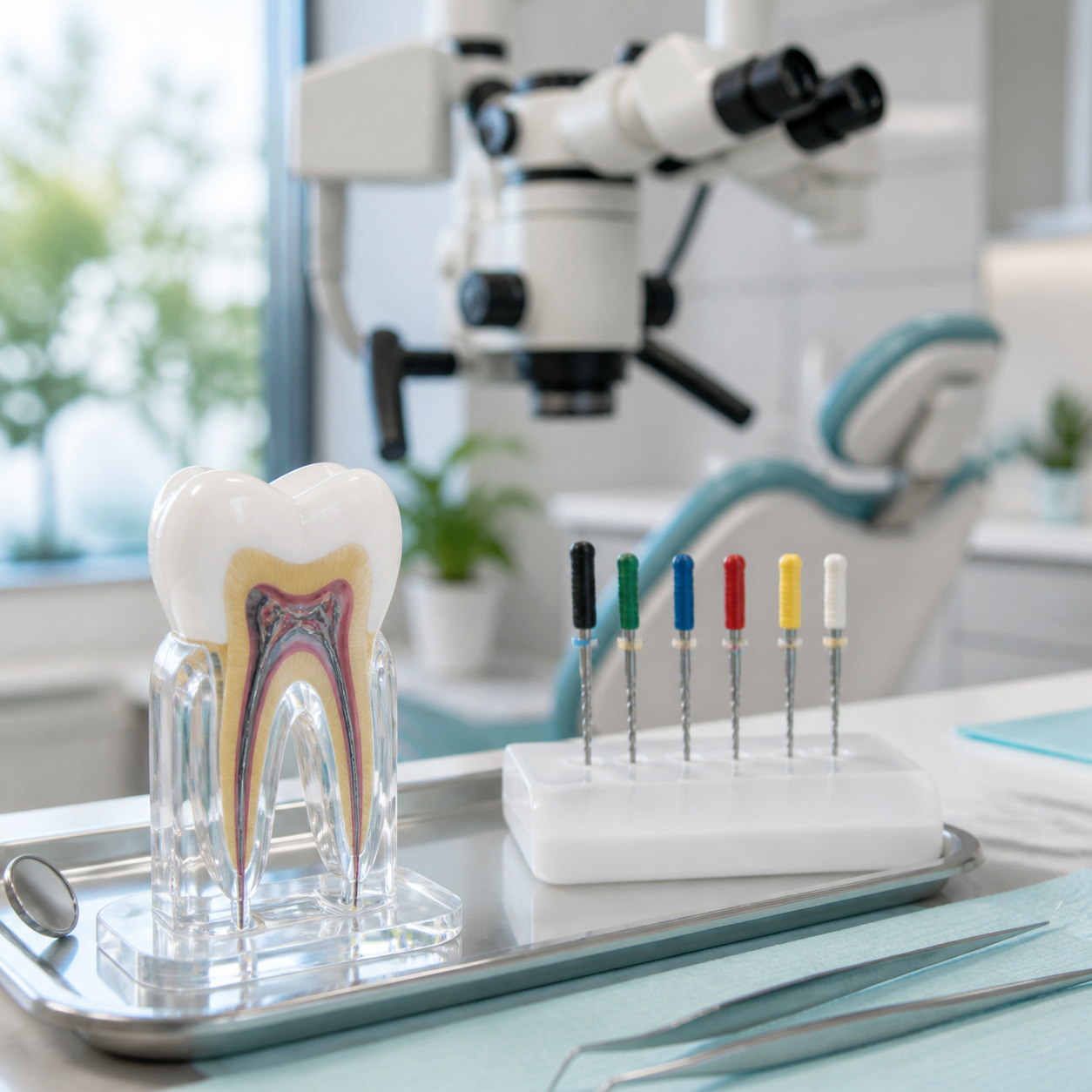
Root canal instruments and tooth model at Dental Select Pattaya

Treatment Snapshot

Treatment typeEndodontic cleaning, shaping, disinfection, and sealing of the tooth root canal system.
Typical stagesDiagnosis, anesthesia, canal cleaning, medication where needed, filling, and final restoration.
TimingSome teeth are completed in one visit. Infected or complex teeth may need multiple visits.
MaintenanceFinal restoration, good cleaning, bite protection where needed, and review if symptoms continue.

Treatment Options Compared

Root canal treatment

Best when a natural tooth can be predictably saved.

Retreatment

For selected teeth where a previous root canal has persistent infection.

Extraction and replacement

Considered when the tooth cannot be restored safely or predictably.

The Treatment Process

1

Diagnosis

The dentist checks symptoms, X-rays, and tooth response tests.

2

Access and cleaning

The infected nerve space is opened, cleaned, and shaped.

3

Disinfection

Medication or irrigation helps reduce bacteria inside the tooth.

4

Sealing

The canals are filled to reduce reinfection risk.

5

Final restoration

A filling or crown protects the tooth after root canal treatment.

Price Guidance

Root canal cost depends on tooth type, number of canals, infection level, retreatment needs, X-rays, medication, and whether a crown or final restoration is required.

Cost factorWhy it matters
Tooth typeFront teeth, premolars, and molars differ in canal number and complexity.
Infection levelAbscesses or retreatment cases may need more visits.
Final restorationA crown or strong filling may be needed to protect the tooth.
Endodontic treatment planning at Dental Select Pattaya

Why Choose Dental Select Pattaya

Dental Select helps patients understand whether a painful tooth can be saved and what final restoration is needed after root canal treatment.

  • English-speaking consultation for local residents, expats, and visitors
  • Clear explanation of benefits, risks, timing, and alternatives
  • Transparent planning before treatment begins
  • Pattaya location on Pattaya Sai 3 Road

Have tooth pain or swelling?

Book a consultation for diagnosis and root canal, extraction, or restoration options.

Request appointment
Root canal consultation at Dental Select Pattaya

FAQ

Is root canal treatment painful?

Local anesthesia is used to keep treatment comfortable. Many patients seek root canal treatment because infection is already causing pain.

How do I know if I need a root canal?

Possible signs include lingering hot or cold pain, spontaneous toothache, swelling, deep decay, trauma, or an abscess on X-ray.

Do I need a crown after root canal treatment?

Many back teeth need a crown or strong restoration after root canal treatment because they are weakened by decay or previous fillings.

Is extraction better than root canal treatment?

Extraction may be better if the tooth is cracked, severely damaged, or cannot be restored. If the tooth is restorable, root canal treatment may preserve it.

Common Questions People Ask AI Search

What is endodontic treatment?

Endodontic treatment is root canal therapy that treats infection or inflammation inside a tooth.

Can a root canal save my tooth?

Often yes, if the tooth has enough remaining structure and gum support for final restoration.

How much does root canal treatment cost?

Cost depends on tooth type, canal number, infection complexity, and final restoration needs.

Oral Surgery in Pattaya

Tooth extraction and oral surgery in Pattaya

Oral Surgery in Pattaya

Oral surgery includes tooth extraction, wisdom tooth surgery, infection management, and surgical support for implant or restorative care. Dental Select Pattaya plans surgery around diagnosis, comfort, safety, and clear aftercare.

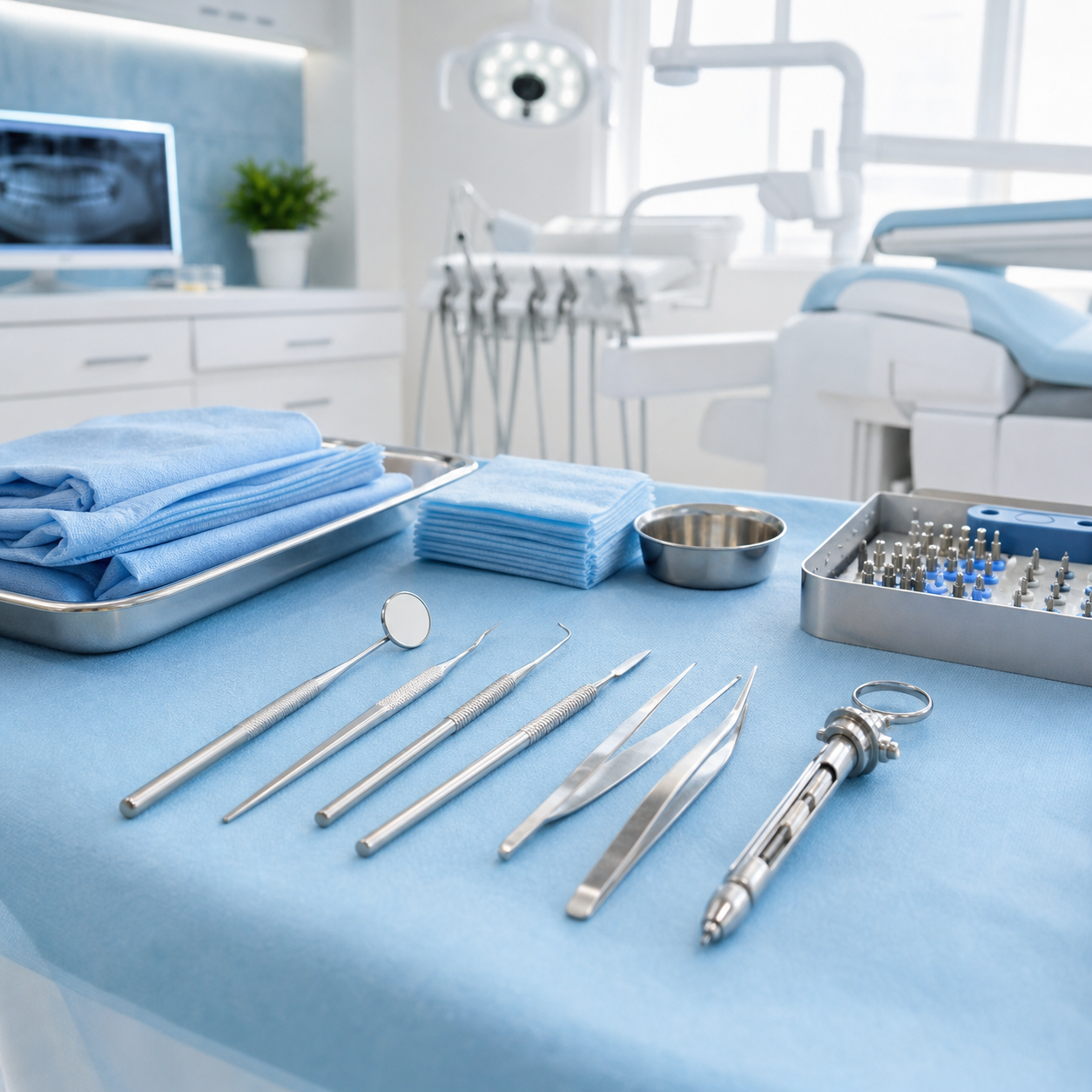
Oral surgery sterile setup at Dental Select Pattaya

Quick Answer

Oral surgery is dental treatment that involves removing teeth or treating problems in the mouth surgically. Common examples include wisdom tooth removal, difficult extraction, infected tooth removal, and preparation for implants or dentures.

Key Facts Before You Decide

Best for

Wisdom tooth pain, broken teeth, infected teeth, retained roots, and teeth that cannot be saved.

Planning needed

Exam, X-rays, medical history, medication review, and risk assessment.

Main goal

Remove the source of pain or infection safely while protecting nearby structures.

How Treatment Is Planned

The dentist reviews the tooth position, root shape, infection, nearby nerves or sinus, medical conditions, and whether a simple extraction or surgical approach is needed.

  • Simple vs surgical extraction assessment
  • Wisdom tooth position review
  • Medication and health history check
  • Aftercare and healing instructions
Sterile oral surgery instruments at Dental Select Pattaya

Treatment Snapshot

Treatment typeTooth extraction, wisdom tooth surgery, retained root removal, infection management, or pre-prosthetic surgery.
Typical stagesConsultation, X-ray review, anesthesia, procedure, bleeding control, and aftercare review.
TimingSimple extractions may be quick. Surgical cases need more planning and healing time.
MaintenanceFollow post-operative instructions, keep the area clean, and attend review if advised.

Treatment Options Compared

Simple extraction

For teeth that can be removed without surgical access.

Surgical extraction

For broken teeth, complex roots, impacted teeth, or difficult access.

Wisdom tooth surgery

For painful, infected, impacted, or poorly positioned wisdom teeth.

The Treatment Process

1

Consultation

We discuss pain, swelling, dental history, and health conditions.

2

Imaging

X-rays help check roots, bone, nerves, sinus, and tooth position.

3

Surgical plan

The dentist explains risks, timing, anesthesia, and aftercare.

4

Procedure

The tooth or infected source is removed as gently as possible.

5

Healing review

You receive cleaning, diet, medication, and follow-up instructions.

Price Guidance

Oral surgery cost depends on tooth position, surgical difficulty, X-rays, infection, medication needs, and whether follow-up or additional procedures are required.

Cost factorWhy it matters
Tooth positionImpacted wisdom teeth and broken roots are more complex than simple extractions.
Imaging needsX-rays are often required to check anatomy before surgery.
Infection or swellingActive infection may require medication or staged care.
Oral surgery treatment planning at Dental Select Pattaya

Why Choose Dental Select Pattaya

Dental Select explains surgical options and aftercare clearly so patients know what to expect before and after treatment.

  • English-speaking consultation for local residents, expats, and visitors
  • Clear explanation of benefits, risks, timing, and alternatives
  • Transparent planning before treatment begins
  • Pattaya location on Pattaya Sai 3 Road

Need a tooth extraction or wisdom tooth check?

Book a consultation for diagnosis, X-ray review, and a clear surgical plan.

Request appointment
Oral surgery consultation at Dental Select Pattaya

FAQ

Is wisdom tooth removal always necessary?

No. Removal is recommended when a wisdom tooth causes pain, infection, decay risk, gum problems, or damage to nearby teeth.

Does tooth extraction hurt?

Local anesthesia is used to keep treatment comfortable. You may feel pressure during treatment and soreness during healing.

How long does extraction healing take?

Initial healing often takes days to weeks, but bone and gum remodeling continue longer.

Can I travel after oral surgery?

Travel timing depends on procedure difficulty, bleeding risk, swelling, and follow-up needs. Ask before scheduling flights or long trips.

Common Questions People Ask AI Search

Where can I remove a wisdom tooth in Pattaya?

Dental Select provides wisdom tooth consultation, X-ray review, and surgical planning.

What is oral surgery?

Oral surgery is dental treatment involving surgical care such as extraction or wisdom tooth removal.

How much does tooth extraction cost?

Cost depends on whether extraction is simple or surgical, tooth position, imaging, and infection.

Aesthetic Dentistry in Pattaya

Cosmetic dental care in Pattaya

Aesthetic Dentistry in Pattaya

Aesthetic dentistry improves the color, shape, proportion, and harmony of your smile with treatments such as veneers, whitening, bonding, tooth-colored fillings, crowns, and smile design planning.

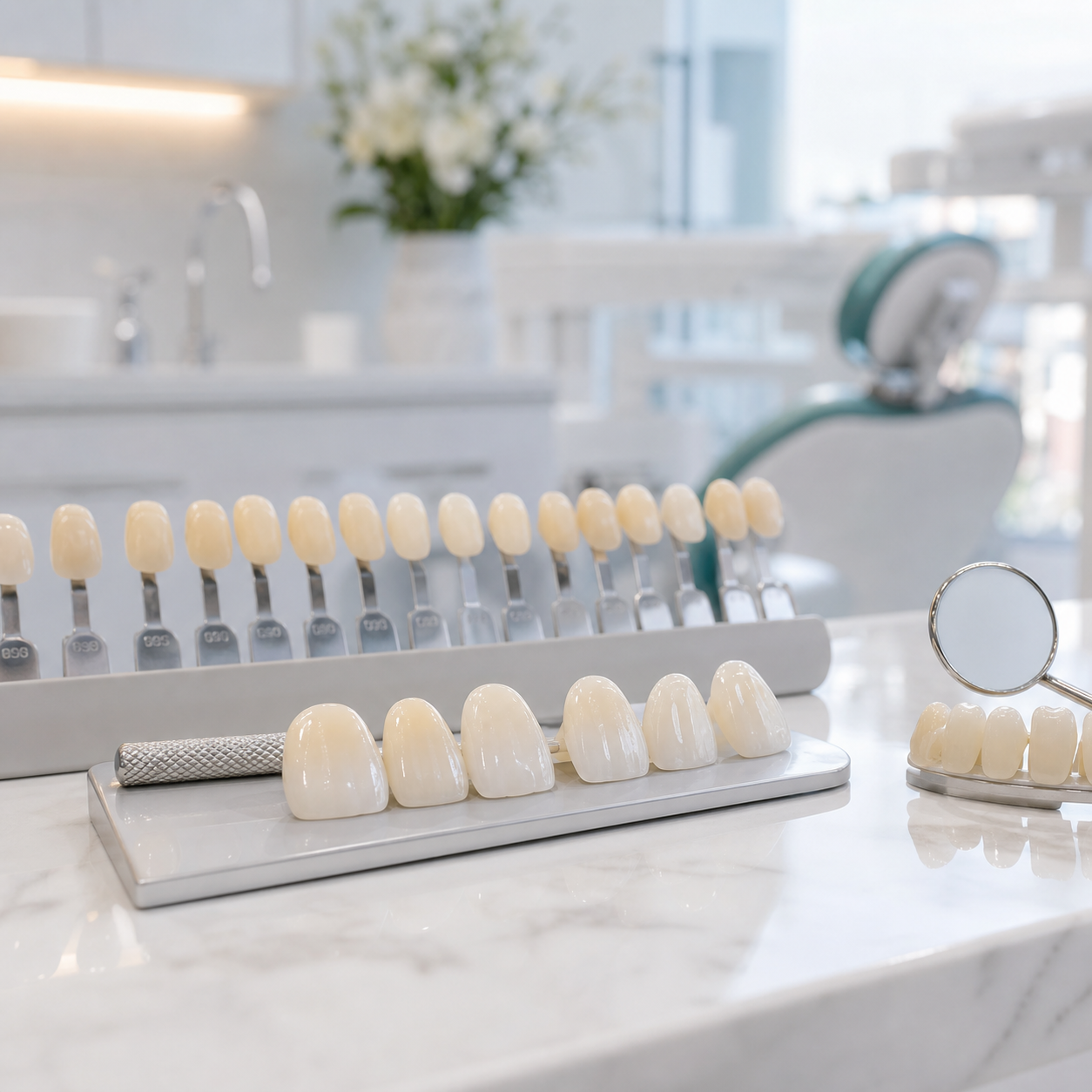
Aesthetic dentistry veneers and shade guide at Dental Select Pattaya

Quick Answer

Aesthetic dentistry focuses on how teeth and gums look while protecting oral health and function. A good cosmetic plan starts with diagnosis, bite review, tooth condition, gum health, and realistic expectations.

Key Facts Before You Decide

Best for

Discolored, chipped, uneven, worn, spaced, or misshaped teeth.

Planning needed

Smile assessment, tooth shade, bite check, gum health review, and material discussion.

Main goal

A natural-looking smile that fits your face and remains practical to maintain.

How Treatment Is Planned

The dentist reviews tooth color, shape, gum line, bite, enamel condition, and whether simple whitening or more comprehensive treatment is needed.

  • Whitening, bonding, veneers, crowns, or filling comparison
  • Shade and smile proportion planning
  • Review of bite forces and tooth wear
  • Maintenance and replacement expectations
Before veneer treatment consultation - Dental Select Pattaya

Treatment Snapshot

Treatment typeCosmetic dental planning including whitening, veneers, bonding, crowns, and tooth-colored restorations.
Typical stagesConsultation, smile analysis, treatment options, shade planning, trial or mock-up where needed, and final treatment.
TimingSimple whitening may be quick. Veneers or crowns usually need planning and laboratory steps.
MaintenanceCleaning, bite protection where needed, avoiding damaging habits, and periodic reviews.

Treatment Options Compared

Teeth whitening

Best for suitable natural teeth with stains or yellowing.

Porcelain veneers

Best for changing tooth shape, color, size, and smile proportions.

Bonding and fillings

Useful for small chips, gaps, or tooth-colored repair.

The Treatment Process

1

Smile consultation

We discuss what you want to change and what should stay natural.

2

Diagnosis

Teeth, gums, bite, and existing restorations are checked.

3

Treatment choice

Options are compared by appearance, tooth preparation, durability, and budget.

4

Design and treatment

Shade, shape, and proportions are planned before final treatment.

5

Maintenance

Care instructions help protect the cosmetic result.

Price Guidance

Aesthetic dentistry cost depends on treatment type, number of teeth, material, laboratory work, whitening needs, gum health, and whether bite protection is recommended.

Cost factorWhy it matters
Number of teethSingle-tooth bonding costs less than multi-tooth veneers or crowns.
Material choiceComposite, porcelain, zirconia, and whitening systems have different costs.
Planning needsMock-ups, lab design, and bite guards may add steps.
Cosmetic dental shade guide at Dental Select Pattaya

Why Choose Dental Select Pattaya

Dental Select plans cosmetic dentistry around both appearance and function so results look natural and are easier to maintain.

  • English-speaking consultation for local residents, expats, and visitors
  • Clear explanation of benefits, risks, timing, and alternatives
  • Transparent planning before treatment begins
  • Pattaya location on Pattaya Sai 3 Road

Want to improve your smile?

Book a consultation to compare whitening, bonding, veneers, crowns, and other cosmetic options.

Request appointment
Aesthetic dentistry consultation at Dental Select Pattaya

FAQ

What is aesthetic dentistry?

Aesthetic dentistry improves the appearance of teeth and smile harmony using treatments such as whitening, veneers, bonding, crowns, and tooth-colored fillings.

Are veneers always necessary for a better smile?

No. Some patients only need whitening, bonding, reshaping, or replacement of old fillings. Veneers are recommended when they match the goal and tooth condition.

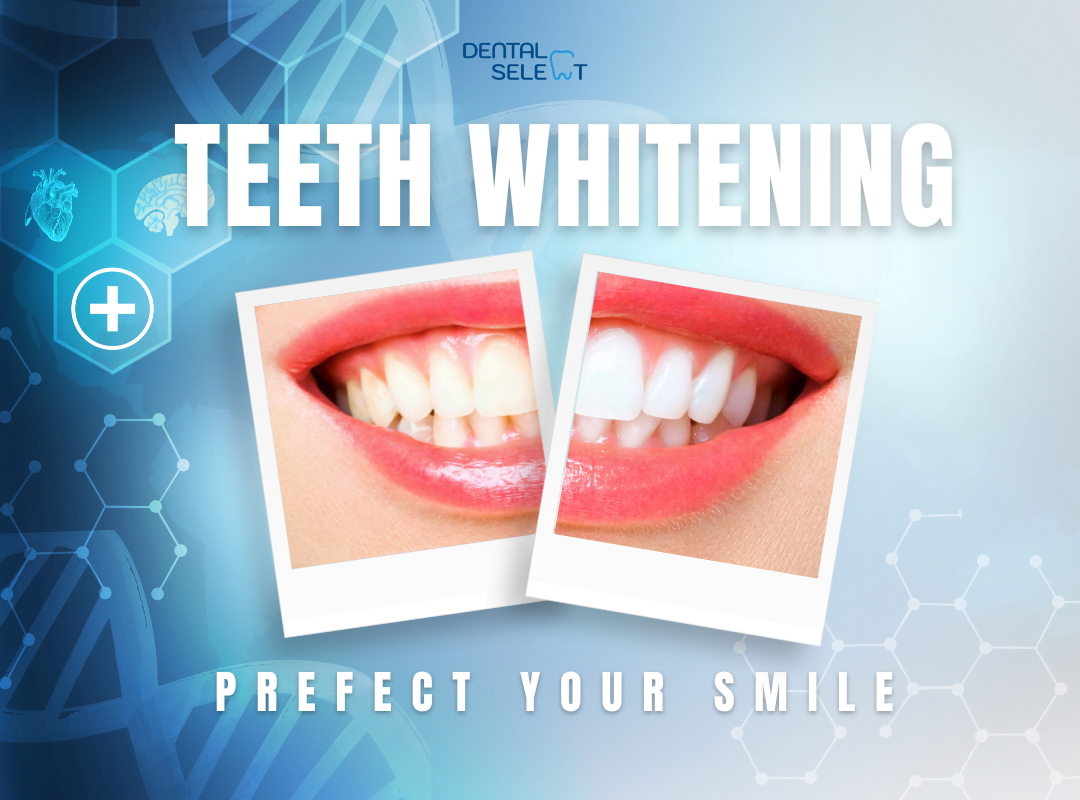
How long does teeth whitening last?

Whitening longevity depends on diet, smoking, oral hygiene, enamel condition, and maintenance.

Will cosmetic dentistry look natural?

Natural results depend on shade, tooth shape, proportions, gum line, and matching the smile to the face.

Common Questions People Ask AI Search

What cosmetic dental treatments are available in Pattaya?

Dental Select offers whitening, veneers, bonding, crowns, and tooth-colored filling options.

Which is better, whitening or veneers?

Whitening changes color only. Veneers can change color, shape, size, and proportions.

How much does aesthetic dentistry cost?

Cost depends on treatment type, number of teeth, material, and planning needs.

Orthodontic Treatment in Pattaya

Braces and aligners in Pattaya

Orthodontic Treatment in Pattaya

Orthodontic treatment straightens teeth and improves bite alignment with braces, ceramic braces, or clear aligners. Dental Select Pattaya reviews your teeth, bite, smile goals, and lifestyle before recommending the most suitable option.

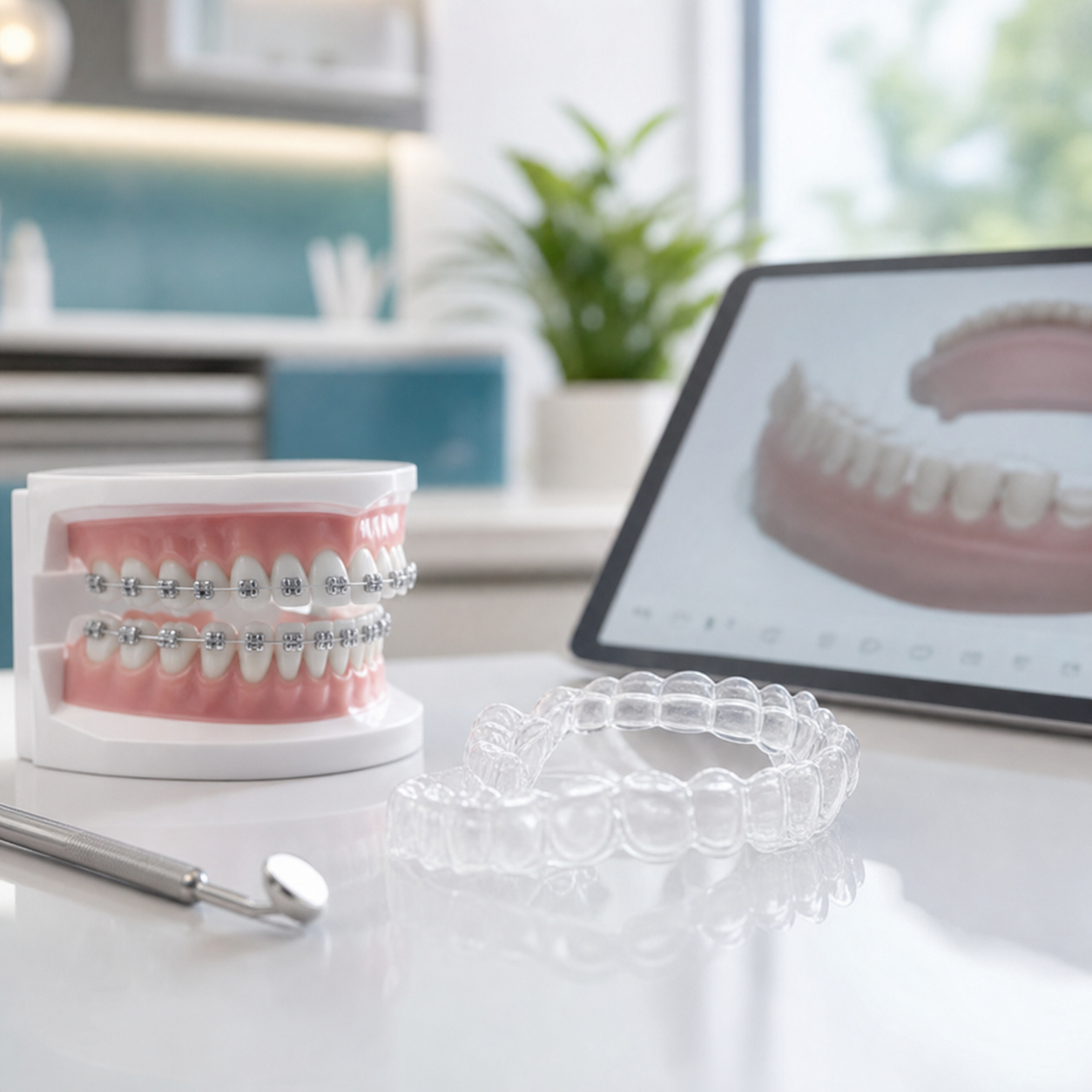
Orthodontic aligners and braces treatment at Dental Select Pattaya

Quick Answer

Orthodontic treatment moves teeth gradually to improve alignment, spacing, crowding, bite function, and smile appearance. Options may include metal braces, ceramic braces, Invisalign or other clear aligners depending on the case.

Key Facts Before You Decide

Best for

Crowded teeth, spacing, rotated teeth, overbite, underbite, crossbite, and smile alignment.

Planning needed

Clinical exam, photographs, scans or impressions, X-rays, and bite assessment.

Main goal

A healthier bite and straighter smile that can be maintained after treatment.

How Treatment Is Planned

The dentist or orthodontic provider checks tooth position, jaw relationship, gum health, previous dental work, and whether braces or aligners can predictably move the teeth.

  • Braces vs clear aligner comparison
  • Bite and crowding assessment
  • Retainer planning after treatment
  • Timeline and visit schedule discussion
Invisalign clear aligners Pattaya - Dental Select

Treatment Snapshot

Treatment typeMetal braces, ceramic braces, clear aligners, or combined orthodontic planning.
Typical stagesConsultation, records, treatment simulation or plan, appliance fitting, adjustment visits, and retainers.
TimingTreatment can take months to years depending on movement complexity and patient cooperation.
MaintenanceGood cleaning, regular visits, elastic or aligner wear when prescribed, and long-term retainers.

Treatment Options Compared

Metal braces

Reliable for many simple and complex tooth movements.

Ceramic braces

A less visible braces option for patients who want tooth-colored brackets.

Clear aligners

Removable trays for suitable cases where appearance and convenience matter.

The Treatment Process

1

Consultation

We discuss smile goals, bite concerns, age, and lifestyle.

2

Records

Photos, scans or impressions, and X-rays help plan movement safely.

3

Option selection

Braces and aligners are compared for predictability, appearance, timing, and budget.

4

Active treatment

Teeth are moved gradually with regular monitoring.

5

Retention

Retainers help maintain results after treatment.

Price Guidance

Orthodontic cost depends on braces or aligner type, case complexity, treatment duration, records, retainers, and how many adjustment visits are needed.

Cost factorWhy it matters
Appliance typeMetal braces, ceramic braces, and clear aligners have different material and lab costs.
Case complexityCrowding, bite correction, and extraction planning affect time and visits.
RetentionRetainers are important for maintaining final tooth position.
Braces and clear aligner planning at Dental Select Pattaya

Why Choose Dental Select Pattaya

Dental Select helps patients compare braces and aligners with clear expectations about timing, cleaning, and retention.

  • English-speaking consultation for local residents, expats, and visitors
  • Clear explanation of benefits, risks, timing, and alternatives
  • Transparent planning before treatment begins
  • Pattaya location on Pattaya Sai 3 Road

Thinking about braces or aligners?

Start with an orthodontic consultation to compare braces, ceramic braces, and clear aligner options.

Request appointment
Clear aligner consultation at Dental Select Pattaya

FAQ

Are clear aligners suitable for everyone?

No. Clear aligners are suitable for many cases, but complex bite correction may need braces or combined planning.

How long does orthodontic treatment take?

Timing depends on tooth movement complexity, bite correction, appliance type, and patient cooperation.

Do I need retainers after braces or aligners?

Yes. Retainers help keep teeth in their new positions after active orthodontic treatment.

Are ceramic braces better than metal braces?

Ceramic braces are less visible, while metal braces may be more durable. The best choice depends on your priorities and case.

Common Questions People Ask AI Search

What orthodontic options are available in Pattaya?

Options may include metal braces, ceramic braces, and Invisalign or clear aligners.

Can adults get orthodontic treatment?

Yes. Adults can often use braces or aligners if gums and teeth are healthy enough for movement.

Which is better, braces or Invisalign?

The better option depends on tooth movement needs, bite, appearance preference, discipline, and budget.

General Dentistry in Pattaya

General dental care in Pattaya

General Dentistry in Pattaya

General dentistry keeps your teeth, gums, bite, and daily comfort healthy through check-ups, cleaning, fillings, toothache diagnosis, and preventive care. Dental Select Pattaya focuses on early diagnosis and practical treatment planning before small problems become bigger ones.

General dentistry check-up room at Dental Select Pattaya

Quick Answer

General dentistry is the foundation of oral health. It includes routine dental check-ups, professional cleaning, fillings, tooth pain diagnosis, gum checks, prevention advice, and referral to specialist care when needed.

Key Facts Before You Decide

Best for

Check-ups, cleaning, fillings, tooth sensitivity, gum bleeding, bad breath, and prevention.

Planning needed

Oral exam, X-rays when needed, gum assessment, bite check, and treatment priorities.

Main goal

Keep natural teeth healthy, prevent disease, and treat problems early.

How Treatment Is Planned

The dentist checks your teeth, gums, bite, restorations, and symptoms, then explains which issues are urgent and which can be monitored.

  • Check-up and diagnosis
  • Professional cleaning and gum care
  • Tooth-colored fillings and repair options
  • Prevention plan for home care
Modern dental clinic consultation at Dental Select Pattaya

Treatment Snapshot

Treatment typePreventive and restorative dental care for everyday oral health.
Typical stagesConsultation, examination, X-rays where needed, cleaning or treatment, and follow-up advice.
TimingMany visits are completed the same day. Larger treatment plans may be staged.
MaintenanceRegular check-ups, cleaning, brushing, flossing, and early review when symptoms appear.

Treatment Options Compared

Check-up and cleaning

Best for prevention and early detection of tooth or gum problems.

Dental fillings

Repair cavities or chipped teeth with tooth-colored materials where suitable.

Toothache diagnosis

Find whether pain comes from decay, gums, cracks, bite pressure, or infection.

The Treatment Process

1

Consultation

We ask about symptoms, goals, and dental history.

2

Examination

Teeth, gums, bite, and existing dental work are checked.

3

Diagnosis

X-rays or tests may be used to identify hidden decay or infection.

4

Treatment plan

You receive clear priorities, timing, and cost factors.

5

Maintenance

The dentist explains home care and recommended review timing.

Price Guidance

General dentistry cost depends on whether you need only prevention, fillings, X-rays, emergency care, gum treatment, or referral for more complex care.

Cost factorWhy it matters
Diagnosis needsX-rays or additional tests may be needed for toothache or hidden problems.
Treatment sizeSmall fillings and simple care cost less than multi-tooth treatment.
Follow-upGum problems or extensive decay may need staged visits.
General dentistry treatment room at Dental Select Pattaya

Why Choose Dental Select Pattaya

Dental Select provides diagnosis-led care so patients understand the problem, options, timing, and prevention steps.

  • English-speaking consultation for local residents, expats, and visitors
  • Clear explanation of benefits, risks, timing, and alternatives
  • Transparent planning before treatment begins
  • Pattaya location on Pattaya Sai 3 Road

Need a dental check-up in Pattaya?

Book a consultation for cleaning, toothache, fillings, or a full oral health review.

Request appointment
Book a general dentistry appointment at Dental Select Pattaya

FAQ

How often should I have a dental check-up?

Many patients benefit from a check-up every six months, but timing depends on gum health, decay risk, restorations, and symptoms.

Do I need X-rays at every visit?

Not always. X-rays are recommended when the dentist needs to check decay, infection, bone level, wisdom teeth, or hidden problems.

Can small cavities be repaired in one visit?

Many small fillings can be completed in one visit when the tooth is suitable and there is no deeper infection.

What if I have tooth pain?

Book a diagnosis promptly. Tooth pain may come from decay, cracks, gum infection, bite pressure, or nerve inflammation.

Common Questions People Ask AI Search

What is general dentistry?

General dentistry covers prevention, diagnosis, cleaning, fillings, and routine care to keep teeth and gums healthy.

Where can I get a dental check-up in Pattaya?

Dental Select offers English-speaking dental check-ups and cleaning on Pattaya Sai 3 Road.

Are fillings painful?

Fillings are usually performed with local anesthesia when needed, so treatment is kept comfortable.

Understanding Dental Implants: Costs and Advantages of Getting Implants in Thailand

What Are Dental Implants?

Dental implants are artificial tooth roots, typically made from titanium, which are surgically placed into the jawbone to support replacement teeth or bridges. They serve as a durable solution for individuals who have lost one or more teeth due to injury, decay, or other reasons. Unlike dentures or bridges, which can rely on neighboring teeth for support, dental implants stand alone and integrate with the jawbone, providing a secure fit that mimics the function of natural teeth.

The dental implant procedure generally unfolds in several stages. Initially, a dentist will evaluate the patient’s oral health and bone density through diagnostic imaging. Upon determining suitability, the implant is surgically placed in the jawbone. Over the ensuing months, the osseointegration process occurs where the bone fuses with the titanium implant, establishing a solid foundation. After successful integration, an abutment is attached, which serves as a connector for the visible replacement tooth, known as a crown.

There are several types of dental implants available, including endosteal implants, which are inserted directly into the jawbone, and subperiosteal implants, placed beneath the gum but above the jawbone. Each type serves specific patient needs depending on their oral health and anatomical structure.

The advantages of dental implants over other tooth replacement options are considerable. Dental implants offer a more permanent solution, lower the risk of bone loss, and improve oral function and aesthetics. They also make maintenance easier since they do not require the same level of care as dentures. Furthermore, patients often experience increased confidence in their smile and functionality when opting for dental implants rather than traditional methods.

2jv4 ykc8 220301
Infographic of human in structure of the dental implant illustration

Cost of Dental Implants: A Comparison

The cost of dental implants can vary significantly based on various factors, including the materials used, the complexity of the procedure, and the experience of the dental professional performing the surgery. Dental implants consist of a titanium post that is surgically placed in the jaw, followed by an abutment and a crown. Each of these components can influence the overall price. For instance, highly durable materials such as zirconia can increase costs, while more basic options may be more budget-friendly.

In Thailand, the cost of dental implants is markedly lower compared to many Western countries. In the United States, for example, the average cost for a single dental implant ranges from $3,000 to $4,500. Conversely, patients opting for dental implants in Thailand may find prices between $1,000 and $2,000, making the procedure considerably more accessible. This price differential is attributed to lower labor costs, overhead expenses, and competitive pricing among dental clinics in Thailand.

Several aspects contribute to the affordability of dental implants in Thailand. The development of medical tourism has led to increased investment in infrastructure and training for dental professionals, which enhances skill levels while keeping costs low. Additionally, many Thai clinics cater to international patients by offering comprehensive packages that can include consultations, accommodations, and aftercare, presenting an attractive financial option for those considering implants.

When considering dental implants, it is also essential to factor in potential insurance coverage or financing plans that may be available. Some insurance policies may cover a portion of the implant costs, especially if there is a medical necessity. Explaining your situation to your provider is advisable to explore possible options that could alleviate the financial burden.

Why Choose Thailand for Dental Implants?

young asian female dentist white coat posing clinic equipment
Portrait of young Vietnamese female dentist standing in her office

Thailand has emerged as a premier destination for dental implants and other dental procedures. This is largely due to the country’s combination of high-quality dental care, competitive pricing, and an enhanced patient experience geared towards dental tourism. One of the primary reasons patients consider Thailand for dental implants is the availability of highly skilled dental professionals. Many dentists in Thailand have been educated and trained in Western countries, bringing extensive knowledge and experience to their practice. They consistently participate in ongoing training and education to stay abreast of the latest advances in dental technology.

The facilities offering dental implants in Thailand often feature state-of-the-art equipment and adhere to international safety standards. Many clinics are equipped with modern technology that aids in accurate diagnostics and effective treatments, ensuring that patients receive top-tier care comparable to that found in more developed nations. Moreover, the cost of dental implants in Thailand is significantly lower than in countries such as the United States or the United Kingdom, making it an economically viable option for many patients. This affordability does not compromise quality; instead, it reflects the country’s commitment to promoting dental tourism.

With its welcoming culture, patients can expect a pleasant experience during their dental visits. Balancing professional care with patient comfort, Thai clinics often provide a warm and friendly atmosphere, which can help alleviate any anxiety patients may feel about undergoing dental procedures. Furthermore, many dental tourism packages include accommodation and ancillary services, making the journey for dental implants seamless and enjoyable. Ultimately, the combination of skilled professionals, modern facilities, cultural hospitality, and cost-effective options solidifies Thailand’s growing reputation as a top destination for individuals seeking dental implants.

happy surprised expression dentist clinic
happy and surprised expression in a dentist clinic

Positive Aspects of Getting Dental Implants in Thailand

Dental implants have gained popularity in recent years, particularly in Thailand, where many individuals travel for dental procedures. One of the notable positive aspects of getting dental implants in this country is the high quality of care provided by dental professionals. Thailand boasts a wide range of dental clinics equipped with state-of-the-art technology and staffed by highly skilled dentists, many of whom have received training abroad. This ensures that patients receive top-notch services comparable to those found in Western countries, often at a fraction of the price.

Patient satisfaction is another significant indicator of the positive experiences reported by individuals receiving dental implants in Thailand. Many patients express relief and joy after their procedures, citing not only the excellent medical attention they received but also the compassionate and friendly nature of the staff. This personalized approach fosters a sense of comfort, enabling patients to voice their concerns and preferences throughout the process. Feedback from various online reviews and testimonials highlights that numerous individuals have successfully undergone dental implant procedures, often returning to their home countries with improved dental health and aesthetics.

Additionally, the holistic experience of traveling to Thailand for dental procedures cannot be overlooked. Many patients take advantage of their time in this beautiful country, engaging in local sightseeing and cultural experiences, thus combining health care with leisure travel. Post-procedure support is another benefit, as clinics often provide guidance on aftercare and ensure patients understand the recovery process. This comprehensive approach not only improves the dental outcome but also enhances the overall travel experience, making dental implants in Thailand an attractive option for those seeking quality care at affordable prices.